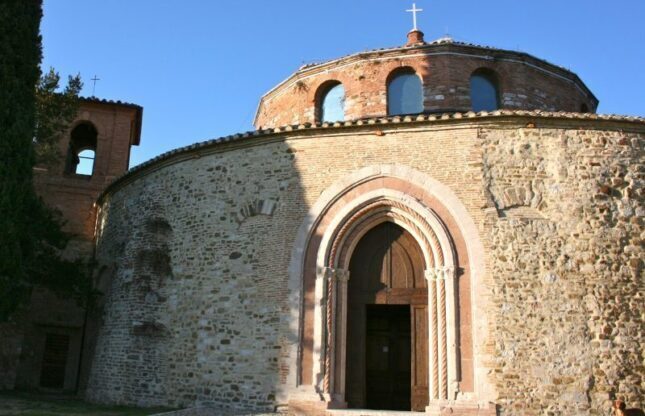
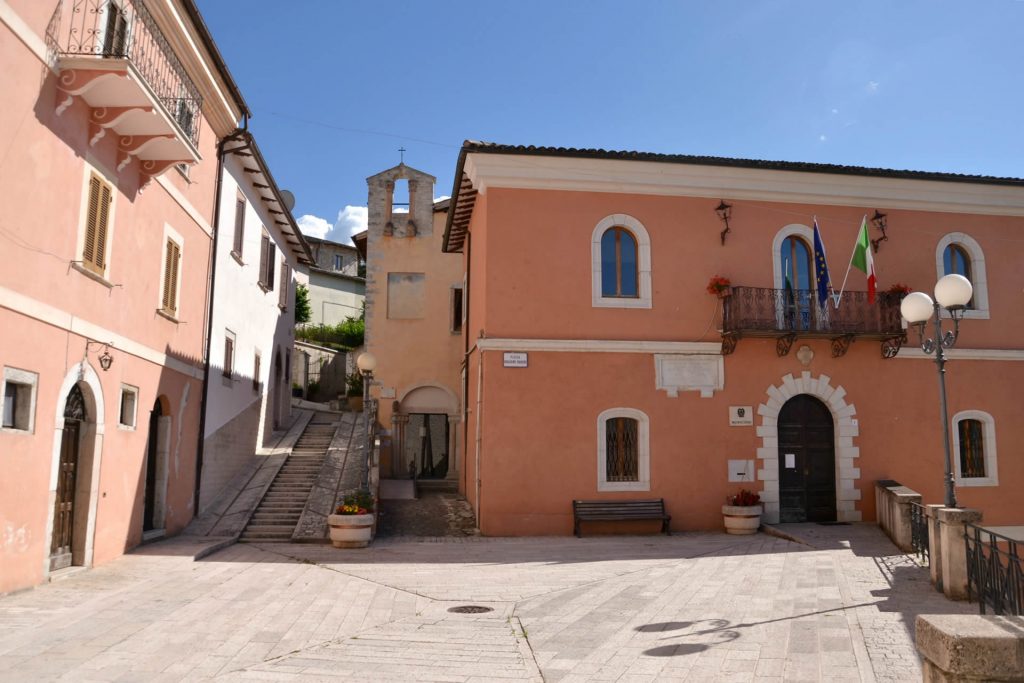
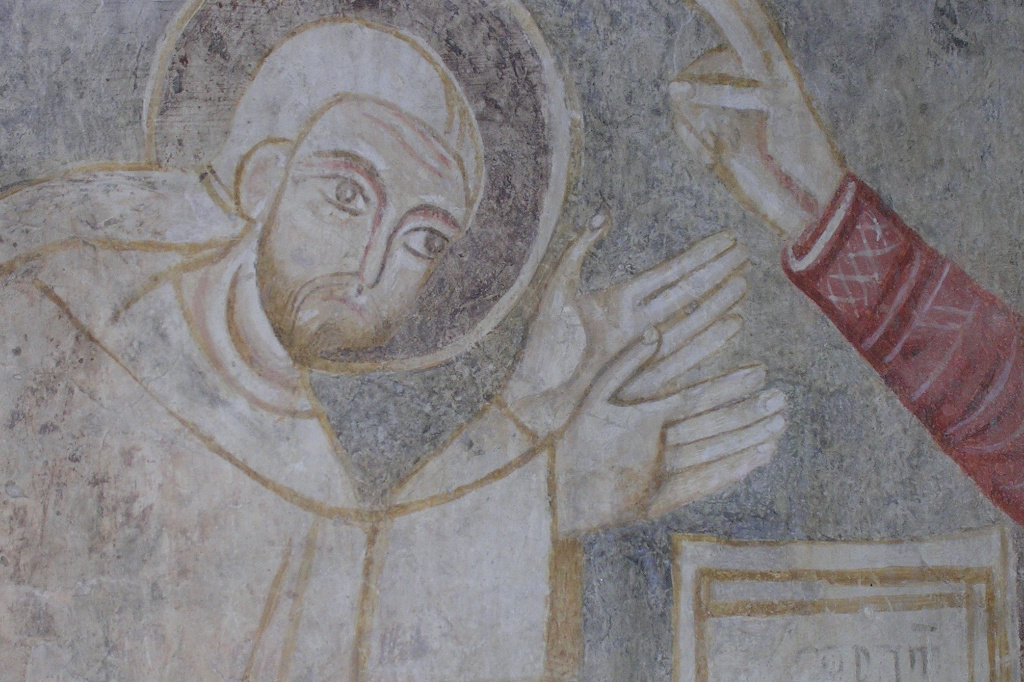
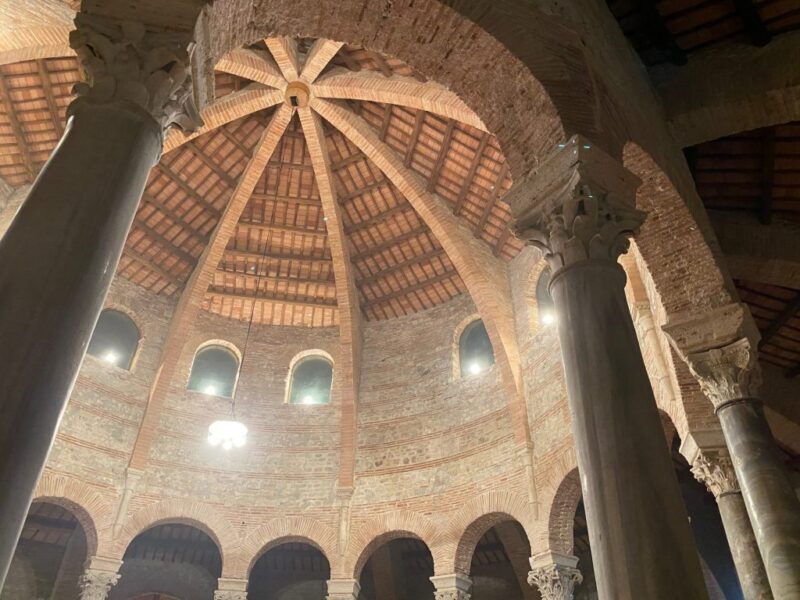
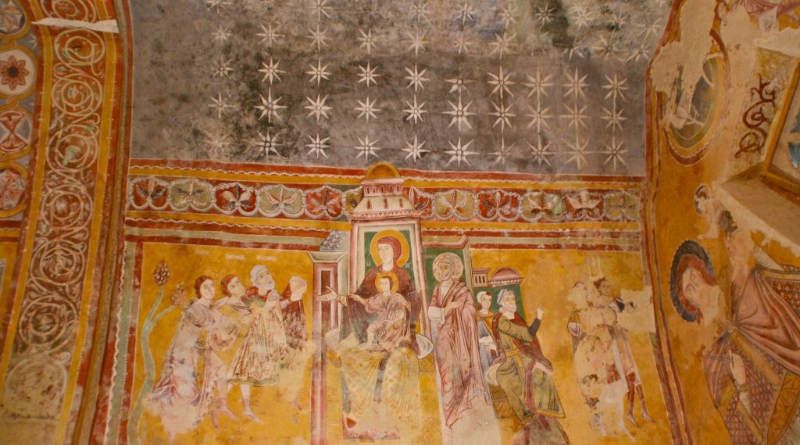

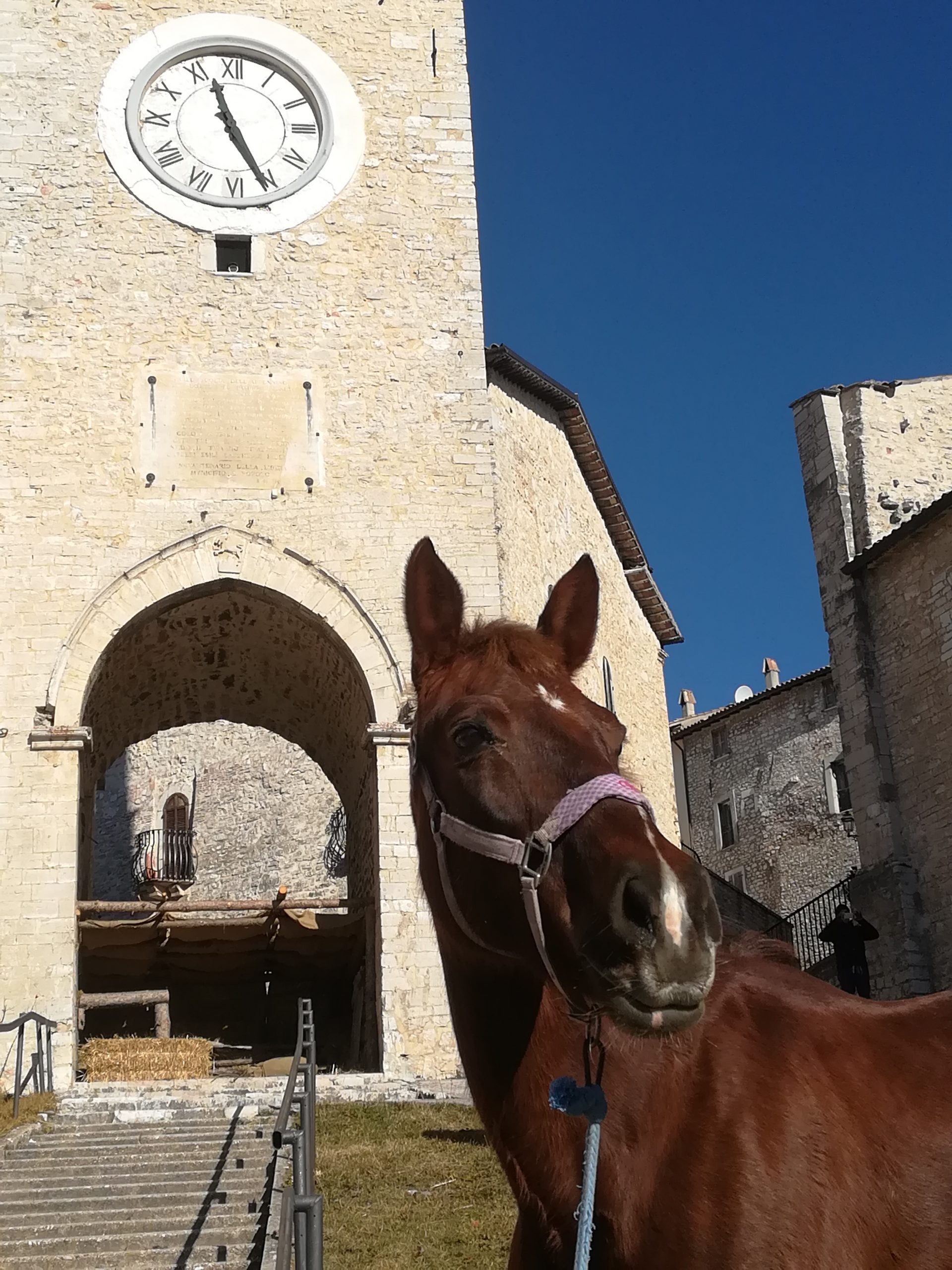
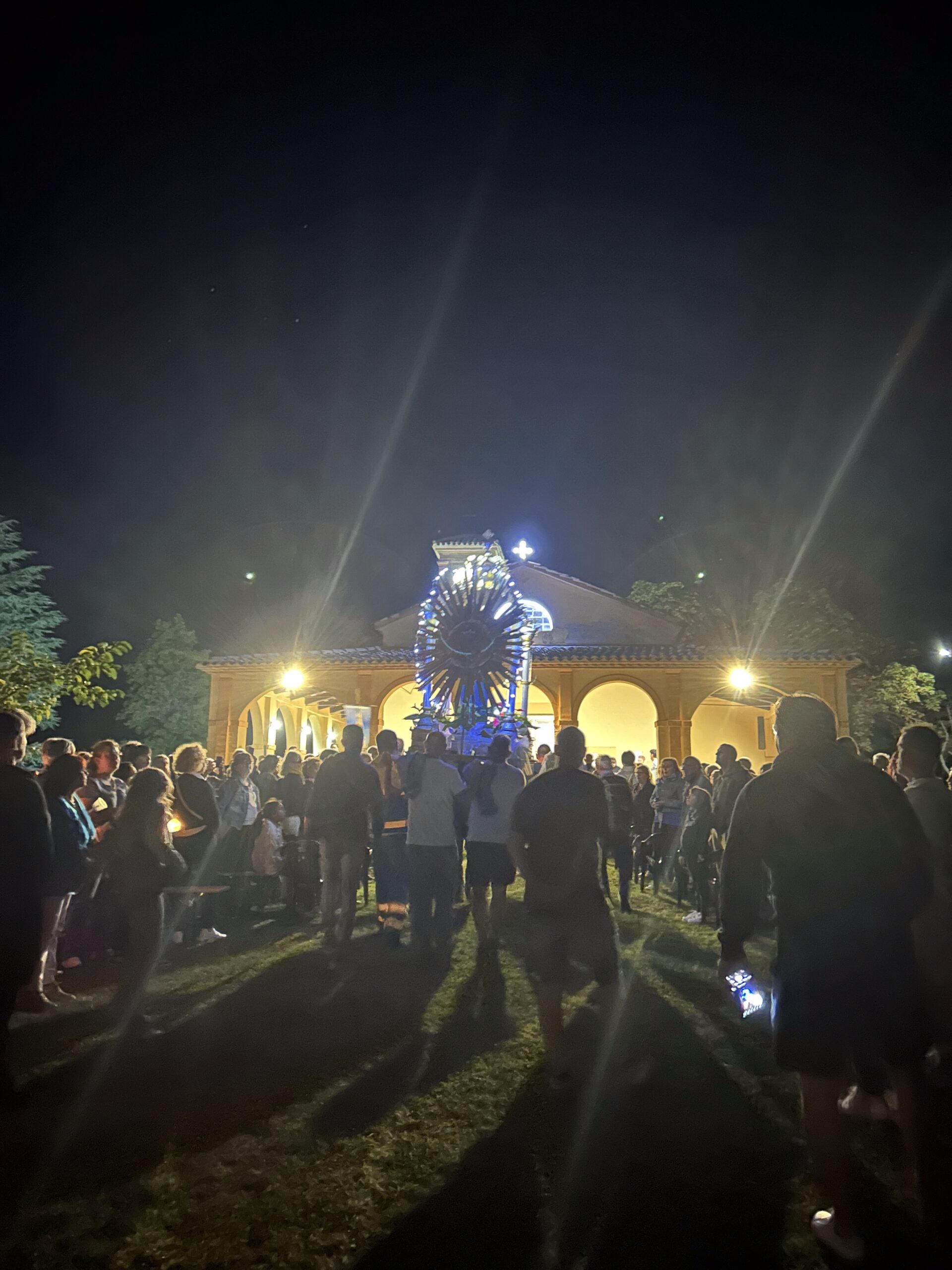
 Along the ancient Roman consular road Flaminia, at the foot of Mount Cucco, lies Purello, a small Umbrian village whose history and roots are tied to the presence of an old church dedicated to the Madonna della Ghea.
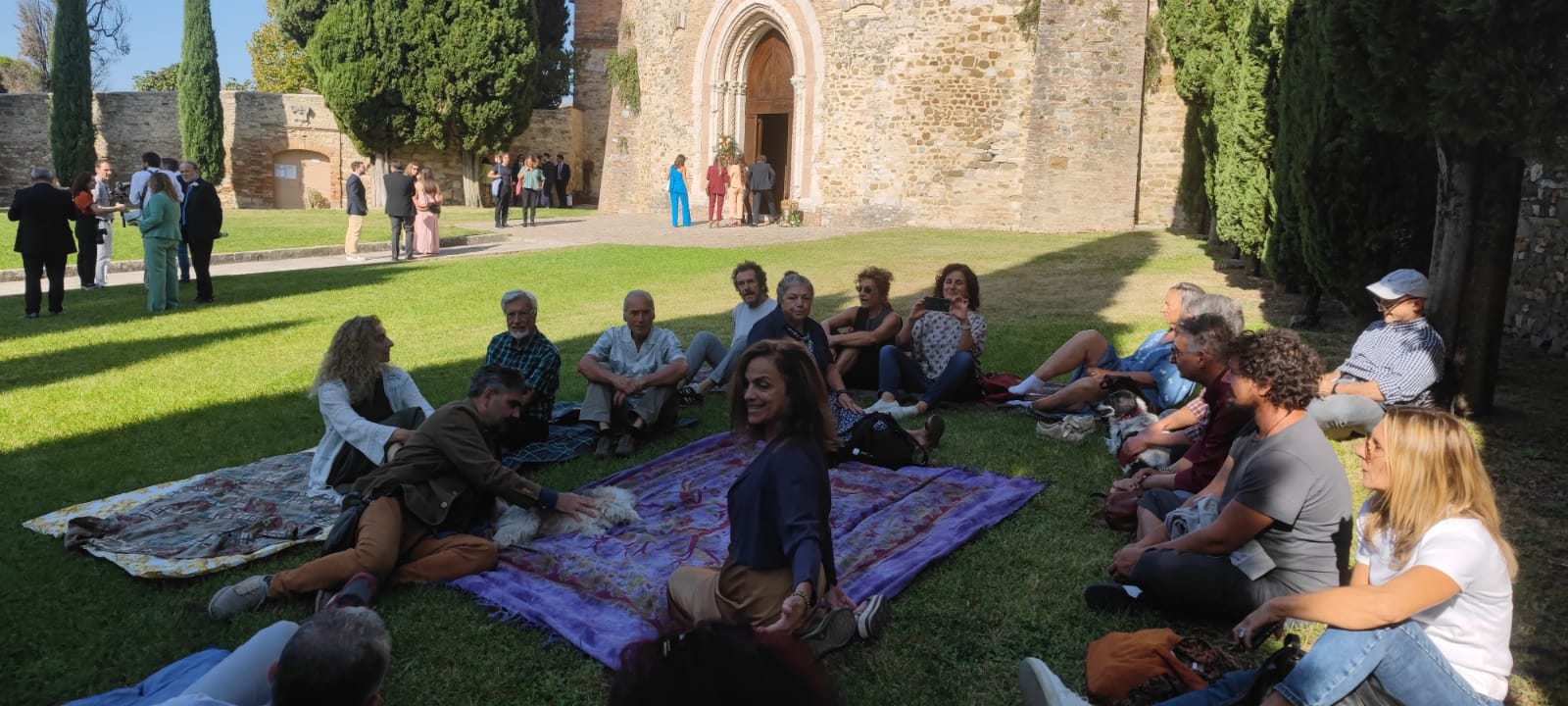
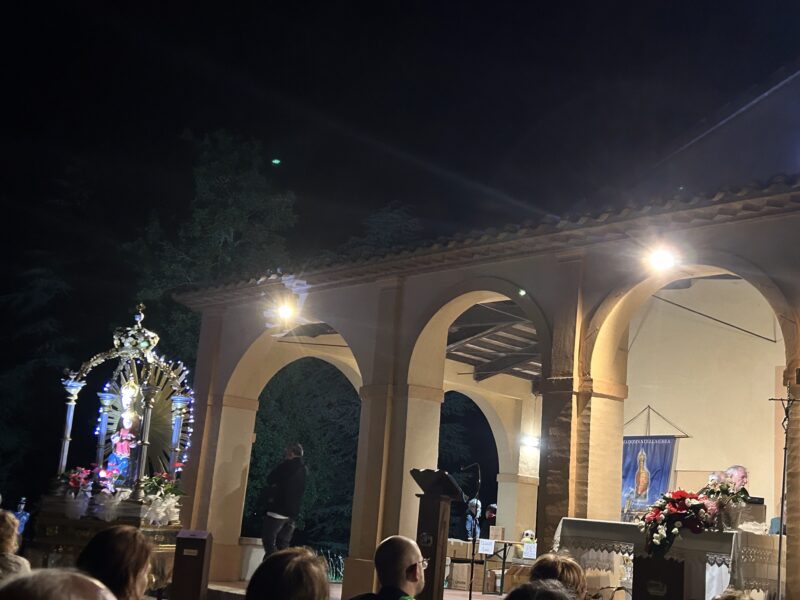
Located in a dominant position, the church is surrounded by a porch looking over the high peaks of Apennines to the east, and over hills and landscapes of rare and extreme beauty in the other directions of the compass. It is likely a place considered sacred since the dawn of time.
The sanctuary’s strategic location, in fact, suggests that the site was frequented as early as pre-Christian times.
Who knows? Perhaps here, the ancient Umbrians worshipped the ancient goddess Cupra, an Italic deity who protected water. Her cult is attested by archaeological finds near the Ghea sanctuary, such as in Fossato di Vico, where the archeologists uncovered the famous “Cubrar Matrer” inscription, engraved on a bronze plate and applied to the edge of a cistern.
Most likely, during the Middle Ages, the site where the Ghea sanctuary stands was frequented not only for religious purposes, but also for defensive and administrative purposes.
Indeed, some medieval documents seem to attest to the presence of a fortified settlement on the Ghea hill. In particular, in the early Middle Ages, this area must have been a Byzantine stronghold, serving to defend against Lombard expansion.
In this regard, it is worth remembering that this stretch of the Roman Flaminia road has played a fundamental strategic role, since the time of the invasions of Goths, as a link between Rome, seat of the papacy, and Ravenna, seat of the exarchate.
The village of Purello was originally called Villa Sant’Apollinare, a name clearly referencing the first bishop of Ravenna, of Eastern origin, after whom the famous basilicas of Sant’Apollinare Nuovo and Sant’Apollinare in Classe were named.
From Castrum to Curtis. The development of a strategic site.
It is within this historical and geographical context that the question of the origin of the term Ghea arises, whose peculiar, apparently isolated form raises interpretative questions.
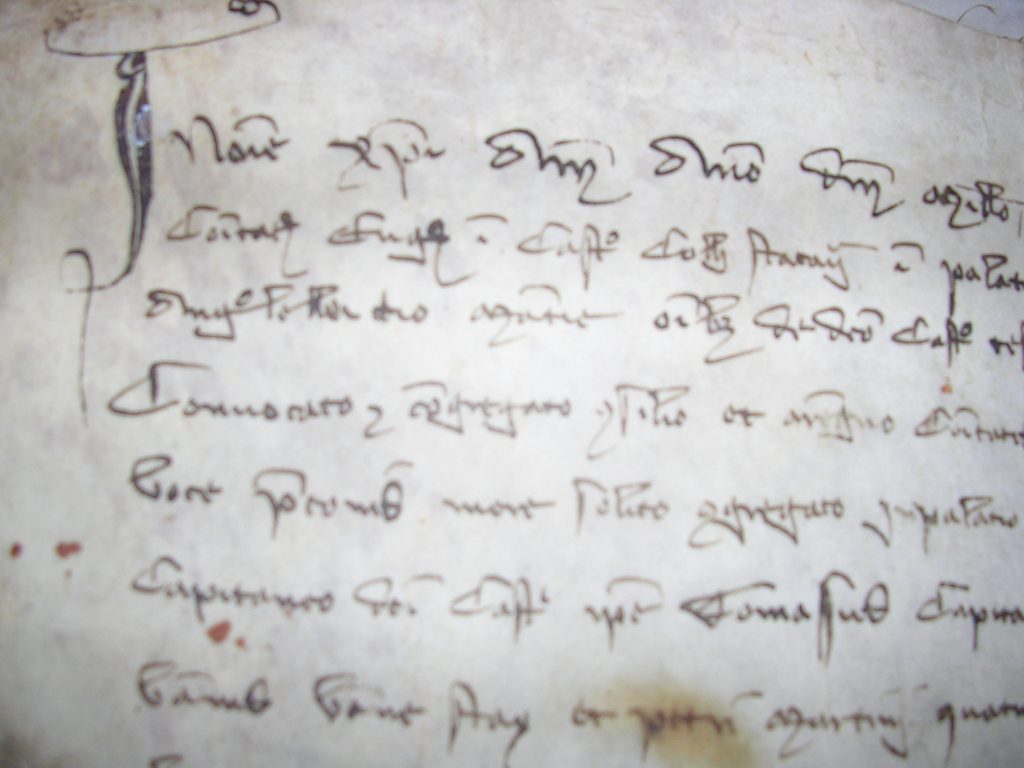
In his book on the Marian shrine of Purello, completed in 1969, Gino Sigismondi examined the origin of the toponym Ghea through the analysis of medieval archival documents. In one of these, dating back to the tenth century, the term Glera appears alongside Fossatum, Sigillum, and other toponyms, easily identifiable with sites and monasteries in the Umbrian Apennine region, bordered to the north by the Chiascio River and to the south by the Topino River.
A different variant of the same toponym appears in text of a papal bull from 1156, originating from the nearby monastery of Santa Maria d’Appennino. This document refers to a curtis located in Glea, a toponym which, according to Sigismondi, through phonetic evolution (particularly the loss of the liquid consonants l and r) would have led to the current form Ghea.
The variant Glea also appears in a medieval document from 1191, in which Pope Celestine III confirms the ownership of certain properties to a monastery in Gubbio, including “octavam partem castri cum omnibus pertinenti suis tam ecclesiae quam aliorum hominum de Glea“.
Only later, as evidenced by two 16th-century notarial deeds, do we find traces of the current toponym in archival documents: Podium Ghee, that from Latin can be traslated: Hillock of Ghea.
The question remains as to whether the variants Glera and Glea both refer to the current toponym Ghea. It is certainly likely that the hill on which the Marian sanctuary stands today developed in the Middle Ages as a castrum, or fortified structure with not only military but also economic and administrative functions, modeled after a self-sufficient curtis.
This must have been the fortified settlement around the end of the 10th century, when Lupo, known as Vico, son of Monaldo, Count of Nocera, obtained it as a fief from Emperor Otto III.
The castrum is also mentioned in a document from 1259, along with Villa Sigilli, Villa Sancte Crucis de Guliano, Villa Sancti Apolinaris, Villa Colbesciani and other places, easily identifiable with churches and settlements not far from the church of the Madonna della Ghea.
However, it was only towards the end of the 14th century that the site on which the Marian shrine stands was named Villa Ghea, in locality Ghea, as recorded in a document dated March 15, 1394.
In light of all this, the idea that the castrum served as a strategic fortified outpost along this part of the “Byzantine corridor” is becoming increasingly concrete. This served the soldiers of the Eastern Roman Empire militarily to control the important communication route connecting Rome to Ravenna during the Gothic and later Lombard invasions.
During the Middle Ages, the settlement would later develop from a castrum to a feudal curtis, characterised by a closed and self-sufficient economy.
Also in his book on the Marian shrine of Purello, Sigismondi hypothesized that the toponym Ghea had something to do with the long-standing Greek-Byzantine presence in the area under consideration. This hypothesis is undoubtedly consistent with the historical and political context of this area, considered militarily strategic and therefore controlled for centuries by military contingents of the Eastern Roman Empire. This is why this area of the central Apennines, geographically closed due to its natural boundaries of rivers and mountains, still bears traces of a persistent cultural, religious, and linguistic influence of Eastern Greek origin.
Questioning the etymological meaning of the toponym Ghea, Sigismondi believed it derived from the Latin root: gleba (or glaeba), which can be translated as a clod of earth, a field, or a plot of land to cultivate. According to Sigismondi the term Ghea generically would mean “land.”
 A new hypothesis: Ghea from the Greek Aγίa
My hypothesis, which I am publishing for the first time on my blog EVUS.IT, is the following:
the name Ghea, referring to the Marian sanctuary of Purello, has a Greek, not Latin, origin, and derives specifically from the term Παναγία, a very popular name in Greece for the Virgin Mary.
The Marian name is of Byzantine origin and is still used today in Eastern Christian tradition, meaning “all holy” or “most holy.”The term παναγία is a feminine name, composed of παν (all) and άγια (holy), and it has its masculine counterpart in πανάγιος (a noun composed of παν and άγιος).
According to my hypothesis, this term would have established itself in the Marian liturgy and popular devotion, undergoing, over the centuries, a graphic and phonetic transformation due to linguistic adaptation, arriving, through the loss of the initial vowel ά (alpha) of the term άγια, at its current form, ghea. This hypothesis is supported by the evident graphic and phonetic assonance of the two terms (a)ghía and ghea. And it’s likely that the correspondence between the Greek vowel etha (H) and the Latin h (H) also played a role in this transformation.
It’s interesting to discover that in Greece, the Marian appellation Παναγία is widely attested in spoken language, where it is often used as an exclamation or invocation to express amazement, dismay, or relief. For example, the phrase: “Ω, Παναγία μου!” corresponds to the Italian popular exclamation “Oh, Madonna mia!”.
The term παναγία is also frequently used in Byzantine liturgy and iconography, particularly in depictions of the Mother of God.
Recently, while on the Greek island of Lefkada, I observed firsthand that this Marian term is also frequently used as a toponym, referring to sacred buildings that were already dedicated to the Blessed Virgin Mary in the Middle Ages. In the small village of Vonitsa, for example, at the foot of a charming castle dating back to the 10th or 11th century, there is a small church with typical Byzantine architecture, which still retains its original name, Παναγία (see photo below).
This title is also widely attested as a toponym in other Greek villages and islands, as well as in Cyprus. These are generally places called Παναγία, which owe their name to the presence of pre-existing monasteries or churches, already dedicated to the Blessed Virgin Mary.
 In conclusion, my hypothesis is that the toponym Ghea derives from a Greek name referring to the sanctity of Mary, linked to the prolonged and persistent presence of imperial officials, soldiers, and their families, who arrived here in the early Middle Ages from the Eastern Roman Empire and settled on this Apennine stretch of the Via Flaminia to defend and control the important strip of territory connecting Rome to Ravenna.
I believe it plausible that the Greek term αγία, meaning “saint,” easily persisted in this area of northeast Umbria, which remained geographically isolated for centuries, both through oral tradition and popular devotion. Over time, it underwent progressive phonetic and spelling changes (such as the loss of the first vowel in the term αγία) until it settled into the current form, Ghea.
Two medieval wooden sculptures from Villa Sant’Apollinare.
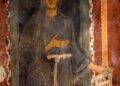
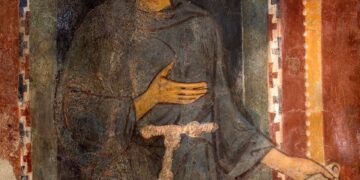
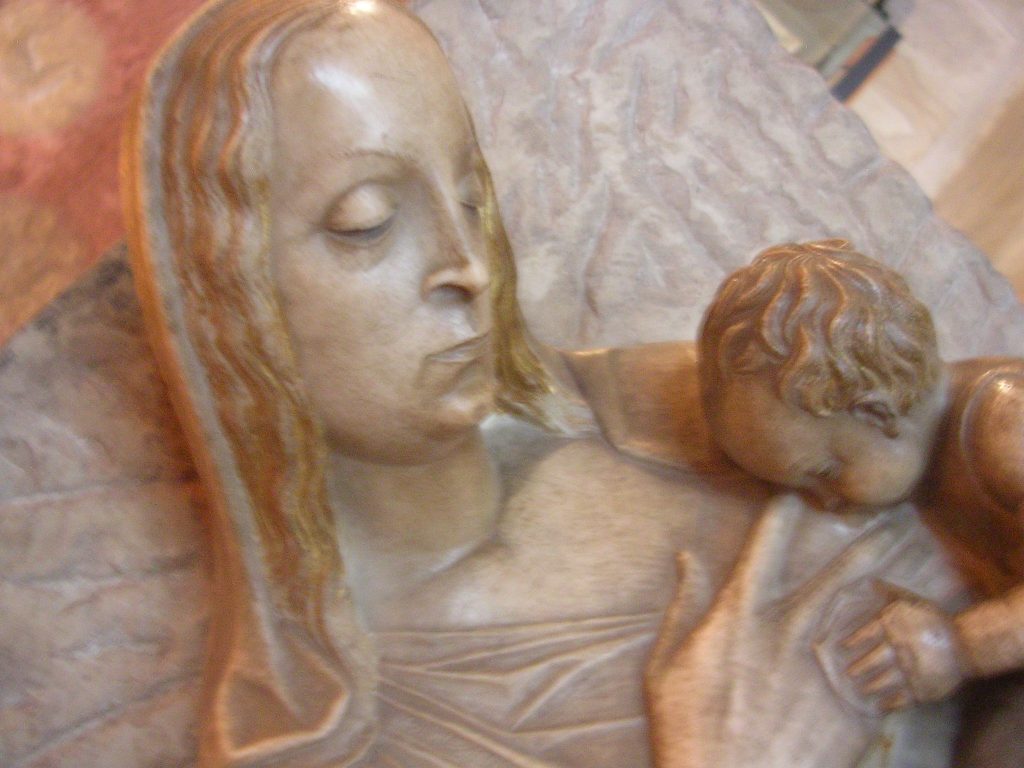
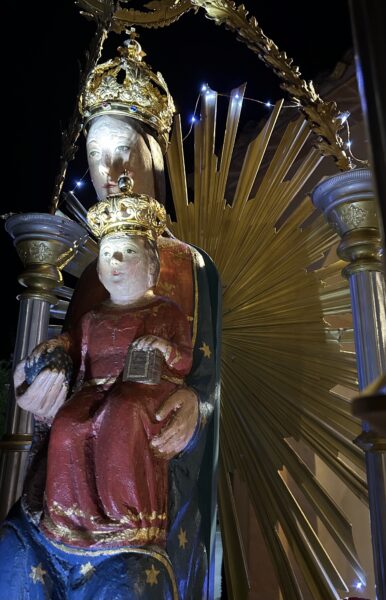
Further evidence supporting this interpretation seems to come from the local artistic heritage.Also from the village of Purello, the ancient Villa Sant’Apollinare, come two beautiful medieval wooden sculptures depicting the Virgin, stylistically attributable to late Romanesque-Byzantine models.
One of them, from the church of Santa Croce di Culiano, formerly owned by the Knights Templar, is currently housed at the National Gallery of Umbria in Perugia.
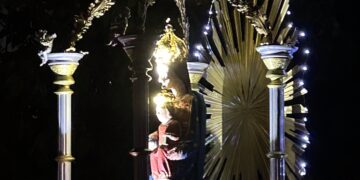
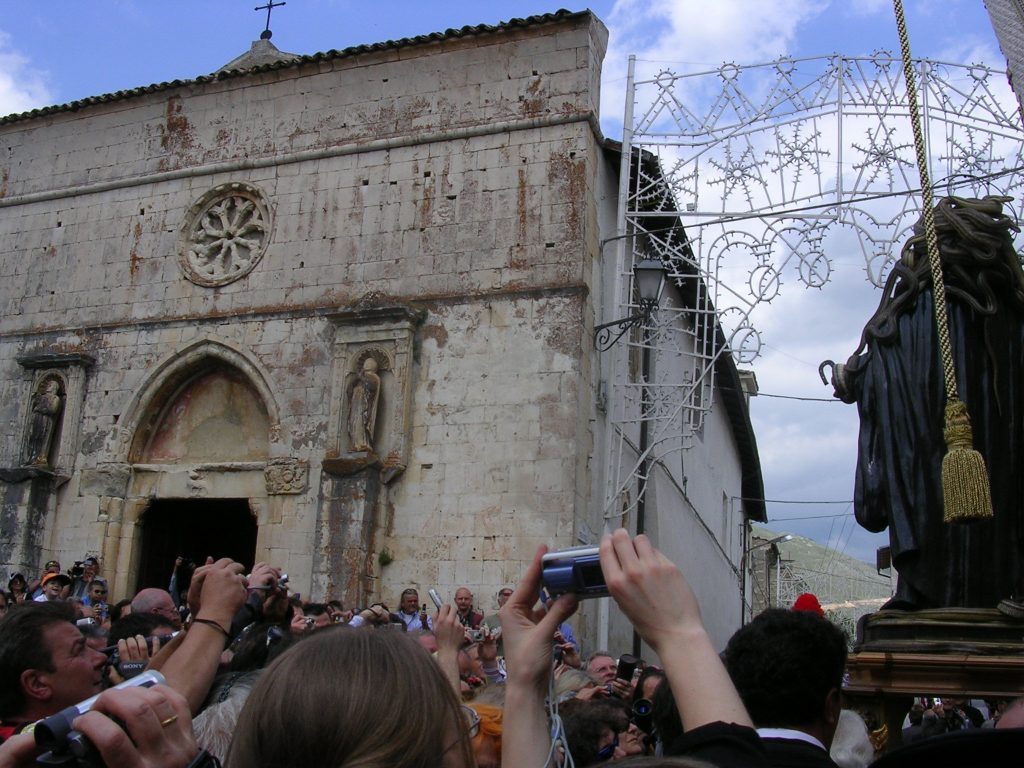
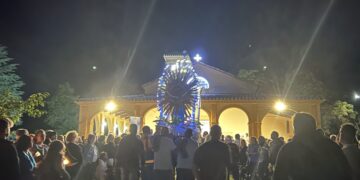
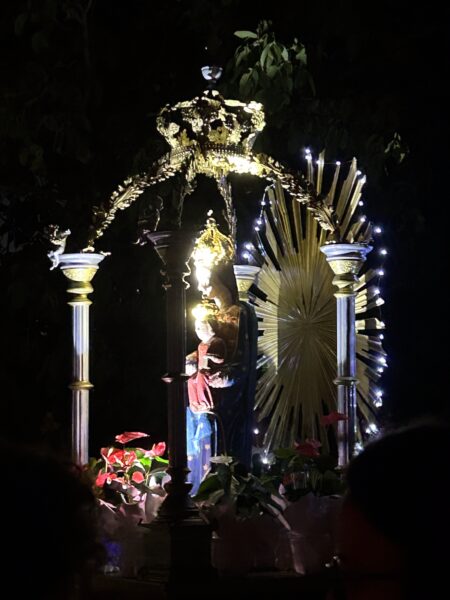
The other, housed in the parish church of Purello, dedicated to Sant’Apollinare, is carried in procession once a year, on the evening before the Marian feast of August 5th.
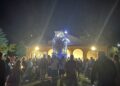
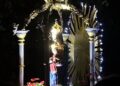
The statue of the Madonna and Child is accompanied by a procession that prays, sings, and lights the path with torches and candles. Upon arrival at the sanctuary, a fireworks display salutes the Madonna della Ghea. Inside the sanctuary, the faithful remain awake in shifts throughout the night, keeping vigil over the statue of the Madonna holding the baby Jesus in her arms.
Finally, I would like to share an oral testimony, collected on site and attested at least until the 1970s, which states that the title Basilissa (Greek: empress) was used by the faithful to designate the crowned wooden sculpture, whose cult is associated with the sanctuary of the Ghea.
This name, far from being a simple devotional name, seems to reflect a profound cultural stratification, also attributable in this case to the Greco-Byzantine tradition, in which the Virgin Mary is associated with a regal and divine dimension.
Text and photos by Antonella Bazzoli, February 19, 2026